AI Dispatching vs. Human Intuition: Mastering the "Co-Pilot" Model
The early 2020s "Digital Freight" revolution aggressively promised to replace human dispatchers entirely with perfect, frictionless algorithms. Tech startups burned billions of dollars attempting to create the "Uber-ization of Freight." But in 2026, the data from the asphalt is unarguably clear: fully automated, human-less dispatching systems are fundamentally failing to capture the volatile, heavily nuanced reality of the American supply chain. Success today exclusively belongs to the "Human-in-the-Loop" or Co-Pilot model—where AI executes the brutal data-crunching, and experienced human operators execute the complex relationship crushing. This comprehensive, 2,500-word operational manifesto explains exactly how the symbiosis of silicon and human soul is currently quietly building the most financially profitable independent fleets in the history of logistics.
The "Ghost in the Machine" Paradox
Why do hardened, multi-million-mile truck drivers and highly capitalized fleet owners still overwhelmingly prefer talking to a human dispatcher over interacting with a glowing app, even when the application's routing math is technically flawless? That question strikes at the heart of the Ghost in the Machine paradox.
A machine learning algorithm can easily calculate the absolute most fuel-efficient, traffic-optimized route from an Atlanta distribution center to a Chicago cross-dock down to the exact millimeter. However, that identical algorithm possesses zero emotional intelligence. It physically cannot negotiate a $200 layover fee with an incredibly angry, overwhelmed warehouse manager who just suffered a catastrophic forklift battery failure on the loading dock. It cannot sense the tonal panic in a freight broker's voice on a Friday afternoon at 4:30 PM and leverage that panic to aggressively add $450 to the spot rate.
In 2026, "AI-Only" load-matching applications used by massive digital brokerages are experiencing massive carrier churn. Drivers unequivocally feel like disposable lines of code in a silicon spreadsheet. The Co-Pilot model mathematically restores the dignity, flexibility, and agency of the truck driver while simultaneously leveraging the terrifying speed of the machine to acquire the best freight.
What AI Does: The Analytical Exoskeleton
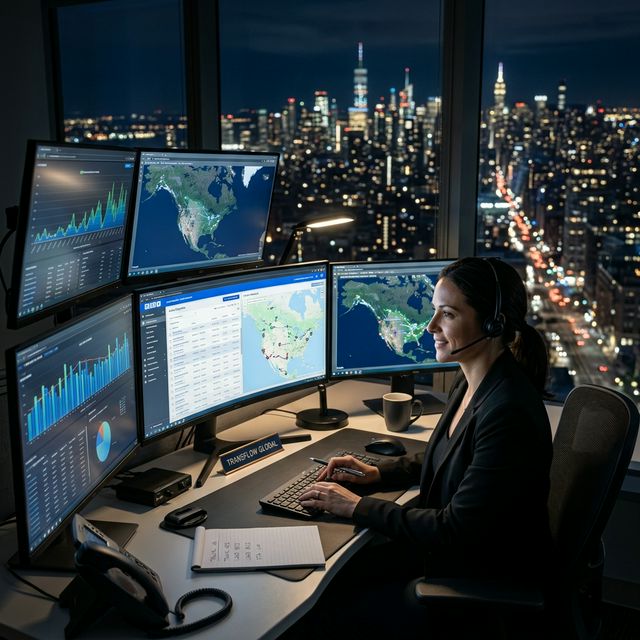
The human brain, while incredible at nuance, is terrible at parallel processing. A brilliant human dispatcher can actively analyze 5 to 7 potential loads simultaneously across three different monitors. An AI Co-Pilot model passively analyzes 50,000 active loads across 40 different broker portals in less than 3 seconds. In our hybrid model, we never let the human do the data crawling; the AI serves as standard-issue "power armor," allowing the human dispatcher to lift massive amounts of data effortlessly:
1. Predictive Lane Harvesting
AI scrapes not just the global DAT and Truckstop load boards, but thousands of hidden, private broker API endpoints simultaneously. It actively constructs "Tri-Hauls" and "Circuit Routes"—non-obvious, multi-day routes that utilize obscure, secondary backhaul markets to turn a standard $2.20/mile trip into a $2.95/mile continuous revenue loop before the truck ever leaves its home base.
2. Algorithmic Rate Surveillance
The machine knows exactly what a specific highway lane will realistically pay *tomorrow morning*. If our predictive models detect a sudden, massive tightening of truck capacity in the Dallas Metroplex, the AI actively advises the human dispatcher with an alert reading: "HOLD capacity. Do not book current $2.10 offers. Market tension indicates a high probability of $2.45/mile surge pricing within 4.5 hours."
3. The HOS Compliance Sentinel
AI actively integrates with the truck's ELD system, monitoring the driver's exact Hours of Service (HOS) down to the fractional second. It automatically, silently filters out any high-paying load that would mathematically place the driver in violation of federal law, or conversely, cause a forced 34-hour reset in a devastatingly high-cost dead-zone like Cheyenne, Wyoming in December.
What Humans Do: The Relationship Architects
The moment the AI identifies the perfect, mathematically optimal load, its job is essentially finished. It hands the target over to the human dispatcher. Freight logistics is, and likely always will be, a bloody, high-stakes relationship business. Brokers are human beings with localized budgets and tremendous anxiety; shippers are humans constantly battling massive corporate supply chain quotas. The human dispatcher in the highly refined Co-Pilot model focuses entirely on capitalizing on human psychology:
Tactical Empathy & Crisis Resolution
When a catastrophic event happens—for example, a 2024 Peterbilt suffers a blown transmission actuator at 2:00 AM in the middle of a torrential downpour in Nebraska while hauling $80,000 of fresh strawberries—an AI app simply flashes a generic "Load Delayed / ETA Missed" alert and automatically penalizes the carrier's internal score.
In the Co-Pilot model, the AI detects the catastrophic drop in vehicle speed and instantly alerts the human dispatcher. The dispatcher immediately initiates emergency protocols: calling the nearest mobile heavy-duty diesel mechanic within a 50-mile radius, calling the broker directly to pre-emptively manage the receiver's expectations, and psychologically calming the stranded driver. This intense, high-value human intervention frequently turns a potential $15,000 cargo claim into a minor logistical hiccup, permanently solidifying trust with the broker.
Extreme Asymmetric Negotiation
Machines calculate standard medians; humans extract maximums. A human dispatcher utilizing Co-Pilot software possesses a terrifying informational advantage over the average freight broker. The dispatcher looks at their screen and sees what the broker has historically paid on this exact lane over the last 30 days, their current company-wide volume, and their direct behavioral patterns. The human uses this hard data to confidently execute asymmetric negotiation—employing calculated silence, leveraging driver loyalty, and understanding the precise moment a broker is desperate enough to entirely blow their budget to cover a failing priority load.
Implementation: Building Your Command Center
At Priority Dispatch LLC, we do not simply purchase off-the-shelf software subscriptions or generic load board access; we engineer highly custom workflow architectures. We utilize heavily tuned generative AI and API automation to instantly handle all "low-value, zero-margin" administrative tasks: instantly populating 14-page carrier packets, rapidly cross-referencing Insurance COIs against the FMCSA SAFER database, instantly validating non-recourse factoring credit scores, and generating automated tracking check-calls to lower-tier brokers.
By completely eliminating this administrative friction, we weaponize our human talent. We free our elite dispatching team to focus 100% of their mental energy and cognitive bandwidth on "high-value" aggressive operations: fighting ruthlessly for that obscure, un-posted load that pays $4.80/mile out of a tight market that an AI script alone could never mathematically convince a broker to release.
Conclusion: The Future is Augmented
Choosing your operational model in 2026 is the most critical financial decision an owner-operator or fleet manager will make. Do not settle for a cold, impersonal robotic algorithm that views you strictly as a data point meant to enrich massive Wall Street investors. Similarly, do not settle for an antiquated "pen-and-paper" dispatching agency relying on gut feelings, dry erase boards, and hope.
You require an operational partner who fundamentally operates at the blinding speed of silicon but speaks, fights, and negotiates with the undeniable heart of an industry veteran.
Priority Dispatch LLC perfectly embodies that exact symbiosis. We actively utilize the most heavily advanced, proprietary "Co-Pilot" operational framework available on the open market today to relentlessly ensure that our partner carriers maintain their position at the absolute top of the national rate charts, week after week. Contact our technology-forward team today and allow our augmented human dispatchers to permanently elevate your fleet's massive profitability potential.
Essential Related Reading
- Machine Learning: The End of Detention Disputes
Discover how automated computer vision and ML models are actively securing our carriers hundreds in lost detention pay. - See the Co-Pilot Model in Action
Learn how our specialized negotiation team utilizes this exact proprietary technology stack on your behalf. - Data-Driven Rebound Tactics
See how the Co-Pilot model perfectly integrates with our aggressive spot market rebound strategies.
About the Author
Muhammad Faisal Bilal is the Founder & CEO of Priority Dispatch LLC. With expertise in connecting TWIC-certified owner-operators with premium port freight, he helps drivers maximize their earnings through strategic load placement across all 48 states.
Connect on LinkedIn →