Beyond the Hype: The Economic Impact of Autonomous Trucking in 2026
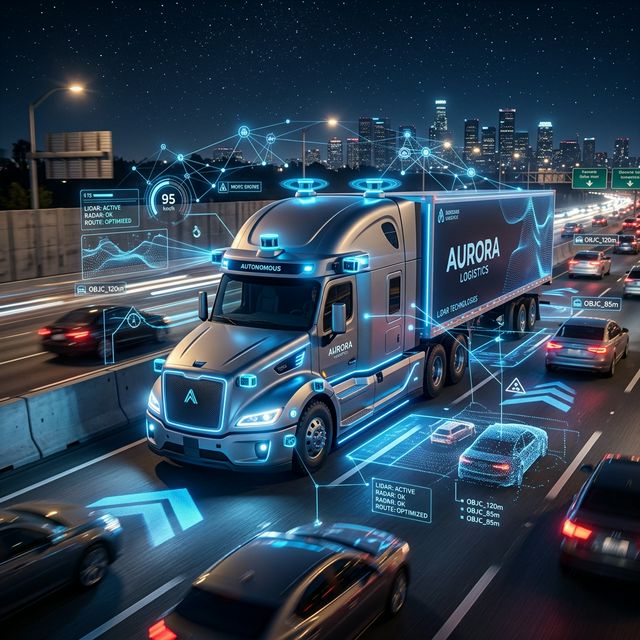
For over a decade, massive tech-conglomerates and aggressive venture capital firms confidently predicted the absolute, total displacement of the human truck driver. However, as Level 4 Autonomous Trucks physically integrate onto public American highways in 2026, the doomsday economic narrative has completely collapsed. Instead of mass unemployment, the autonomous revolution is aggressively fracturing the logistics labor marketâ€â€birthing incredibly lucrative new specializations, generating a massive boom in urban drayage, and heavily rewarding drivers who transition from analog steering wheels to digital command centers. This comprehensive 2,500-word analysis completely dissects the true economic reality, the cyber-hijacking risks, and the highly profitable "Human Rescue" economy currently taking hold.
Edge Cases and the "Safe Stop" Dilemma
The fundamental flaw in early autonomous predictions was the severe underestimation of the chaotic unpredictability of open public roads. In 2026, even the most advanced, mathematically flawless AI algorithms routinely encounter "Edge Cases"â€â€scenarios completely absent from their petabytes of training data.
What happens when an autonomous truck encounters a severely overturned livestock trailer blocking three out of four lanes, while a frantic local police officer utilizes non-standard, aggressive hand gestures to illegally route traffic down a tight, opposite-direction shoulder heavily littered with sharp metal debris?
The AI fundamentally cannot process this chaos. As per federal safety protocols, it aggressively executes a "Minimum Risk Condition" (MRC) maneuver. It simply pulls the 80,000-pound combination vehicle tightly onto the highway shoulder, engages the air brakes, turns on the four-way flashers, and mathematically "gives up." It refuses to move until legally overridden by human intelligence.
The Boom of the "Human Rescue" Economy
Because autonomous trucks frequently execute these safe-stops during severe weather events or complex construction zones, an incredibly highly-compensated secondary industry has aggressively evolved in 2026: The Autonomous Recovery Specialist.
Corporate autonomous fleets absolutely cannot tolerate a massive, fully-loaded $400,000 automated truck sitting abandoned on the shoulder of Interstate 10 for six hours degrading its rigid delivery window. When an AI unit safely aborts its mission, elite "Rescue Drivers" are instantly deployed.
The Execution: These highly experienced, veteran CDL holders are often stationed at specialized relay hubs. When an AI fails, a Rescue Driver is aggressively dispatched via helicopter or high-speed company chase vehicle directly to the stranded truck's location. They physically climb into the cab, override the silicon drive-systems, personally man-handle the truck through the complex hazard zone, and then legally re-engage the AI once the highway normalizes.
In 2026, a certified Autonomous Recovery Driver commands a base salary severely exceeding $130,000 per year, sleeping heavily in their own bed every single night.
The Tele-Operations Command Centers
Not every AI failure requires a physical human extraction. An enormous percentage of the displaced OTR driving workforce is legally transitioning into heavily fortified "Tele-Operations" facilities.
When an autonomous truck encounters a mild obstruction (e.g., a vaguely parked construction vehicle partially occluding the lane), it halts and pings the command center via dedicated, military-grade 5G/Starlink arrays. A human operatorâ€â€essentially a veteran trucker sitting at a massive desk equipped with an intricate steering apparatus and a 360-degree array of ultra-high-definition monitorsâ€â€briefly seizes direct remote control of the massive vehicle. They legally and smoothly navigate the truck around the minor obstacle from 1,400 miles away, and seamlessly return control back to the onboard computer.
This represents a massive quality-of-life evolution. Veteran drivers suffering from brutal chronic back pain or severe knee degradation from decades of clutching are now leveraging their invaluable intuitive road knowledge from a highly ergonomic, heavily air-conditioned command center based primarily in Austin, Texas or Atlanta, Georgia.
The Drayage Financial Explosion
The absolute primary reality of 2026 is that autonomous trucks execute strictly "Hub-to-Hub" logistics. They are legally barred from massive urban logistics centers. They require human drivers to execute the agonizing first and last mile.
- Hyper-Localized Operations: Owner-operators are aggressively dropping their massive sleeper cabs in favor of nimble day-cabs. They violently execute 6 to 8 localized trips per day directly shuttling trailers between massive corporate distribution centers and the peripheral Autonomous Transfer Hubs.
- Extreme Quality of Life: This economic shift fundamentally solves the legendary driver-retention crisis. Drivers are actively generating high gross revenues while legally ensuring they are parked securely in their own driveway by 6:00 PM every evening. The era of sleeping in a truck stop for 21 consecutive days is rapidly fracturing.
Cyber-Hijacking: The Existential 2026 Security Threat
As a 40-ton vehicle heavily transitions from mechanical gears to millions of lines of executing C++ code, it intrinsically becomes an incredibly massive server. It becomes highly vulnerable to enterprise-grade cyber warfare.
In extremely early 2026, the logistics industry suffered the horrific "Ghost Fleet" incident. Utilizing highly sophisticated zero-day exploits, an offshore cyber-cartel remotely disabled the transmission control units on an entire convoy of 14 autonomous trucks actively transiting a major bridge span near Savannah, Georgia. The cartel simultaneously paralyzed regional East Coast commerce for 18 grueling hours and demanded an astronomical cryptocurrency ransom to release the digital brakes.
This devastating breach forced an immediate, incredibly severe reaction from insurance underwriters and federal authorities. The presence of a physical human in the cab is no longer considered a labor cost; it is mathematically considered the ultimate, un-hackable cybersecurity safeguard.
As a direct result, massive shippers carrying high-value electronics, pharmaceuticals, and sensitive defense materials are legally modifying their routing guides to strictly prohibit the use of purely autonomous vehicles. They gladly pay a massive $0.80/mile premium exclusively to secure verified, human-driven capacity where a physical operator can legally execute a manual braking override in the event of an electronic seizure.
Conclusion: A Reshaped, Highly Profitable Labor Market
The "End of the Truck Driver" was an incredibly effective marketing slogan utilized by tech companies to raise rapid venture capital. The brutal economic reality of 2026 proves exactly the opposite. Autonomous technology is not fundamentally replacing the human professional; it is actively serving as a massive force multiplier that severely elevates the human driver's economic value by removing the monotonous portions of the job and heavily monetizing their crisis-resolution abilities.
The independent motor carrier who stubbornly insists on maintaining a poorly-managed, high-friction, 2,800-mile trans-continental solo-driver model will systematically bleed capital fighting against the automated fleets. However, the elite carrier who aggressively pivots into extreme specializationâ€â€mastering intense regional drayage, high-value hazmat, and heavily protected human-required lanesâ€â€will forge incredible generational wealth.
Priority Dispatch LLC represents your tactical compass through this massive disruption. We heavily rely on aggressive data analytics to maneuver our partnered owner-operators away from strictly automated highway lanes and directly into the incredibly lucrative, specialized, human-dependent freight sectors that algorithms cannot touch. Contact our executive dispatch analysts today to heavily future-proof your motor carrier operation against the sweeping technological tide.
Essential Future-Proofing Resources
- The Autonomous Technology Deployment Timeline
Understand the exact Lidar sensor stacks and OEM manufacturing timelines dictating where autonomous trucks will deploy next. - Combatting Sophisticated Logistics Fraud
Digital Hijacking isn't limited to autonomous trucks. Learn how to explicitly protect your human fleet from identity theft. - Specialized High-Margin Dispatch Services
Discover how Priority Dispatch routes its human drivers primarily into lanes the A.I. giants physically cannot touch.
About the Author
Muhammad Faisal Bilal is the Founder & CEO of Priority Dispatch LLC. With expertise in connecting TWIC-certified owner-operators with premium port freight, he helps drivers maximize their earnings through strategic load placement across all 48 states.
Connect on LinkedIn →