Hard Truths & Insider Tips: What I Learned in the Logistics Trenches

Over the years of running Priority Dispatch LLC and dealing intimately with owner-operators, fleet managers, and mega-brokers, I have seen fortunes made and entirely lost. The trucking industry does not forgive ignorance. Here are the deepest, most unfiltered lessons I’ve learned from the front lines—tactics you won’t find in a basic CDL manual.
1. The Bill of Lading (BOL) is Your Execution Order
I cannot count how many times my carriers were denied $300 to $500 in rightful detention pay because of a single missing signature on a piece of paper. The BOL is not merely a receipt; it is a binding legal contract between you, the shipper, and the receiver.
The Field Protocol:Never, ever leave a shipping dock without the guard or warehouse manager physically signing your BOL with an exact timestamp of your arrival ("In Time") and departure ("Out Time"). If you are delayed for 4 hours, and your BOL simply says "Loaded" with a scrawled signature, the broker will automatically deny your detention claim. You have zero leverage without the stamp.
What if the receiver refuses to sign the timestamp?
In professional dispatching, if a receiver refuses to sign, we immediately instruct the driver to photograph the facility gate with the truck in frame, screenshot their ELD geofence timestamp, and send a macro message to the broker via the load tracking app while still sitting on the property. That creates an undeniable digital paper trail.
2. "Cheap" Loads Cost You Triple
When the spot market collapses, fear takes over. I see owner-operators take loads paying $1.10 a mile just "to keep the wheels moving." This is mathematical suicide.
Your truck has an absolute fixed Cost Per Mile (CPM) just to turn the ignition on—factoring in diesel, insurance, wear and tear, and IRS taxes. If your CPM is $1.35 and you take a load for $1.15, you are literally paying the broker $0.20 for the privilege of destroying your tires. You are better off sitting at the truck stop with the engine off than moving backwards into debt. Know your exact CPM down to the penny.
3. Master the Psychology of Broker Negotiation
Brokers are paid on margin. If a shipper gives them $2,000 to move a load, and they sell it to you for $1,500, they pocket $500. They are trained to sound desperate, rushed, and broke.
- The Friday Afternoon Squeeze: Between 3:00 PM and 5:00 PM on a Friday, broker panic sets in. Shippers will penalize brokers if weekend loads are left on the dock. If your truck is empty at 4 PM on a Friday near a major hub, demand premium rates. The broker's margin expands rapidly when the shipper starts yelling.
- Always Ask "What's the actual weight?" A broker will post a load as "40k lbs." Sometimes it's actually 25k lbs of light insulation. If you find out it's a lightweight load, you know your fuel economy will soar, making a lower gross rate much more profitable overall.
- Leverage the DAT Load Board Data: Never guess what a lane pays. Use tools like the DAT Load Board or Truckstop to see the 15-day average. If a broker offers $1.50/mile on a lane that averages $2.10, call them out with the exact DAT data point. View the National DAT Trendlines here .

Spot Rate Intelligence
Real-time DAT and Truckstop data is your most powerful negotiation weapon. Never guess a lane rate.
4. Factor Carefully: Recourse vs. Non-Recourse
Net 30 or Net 60 day payment terms from brokers will suffocate a new carrier's cash flow. You need diesel money today. This is why factoring companies exist—they buy your invoice for a ~2-3% fee and pay you within 24 hours. But there is a massive trap here.
Recourse Factoring: If you sell an invoice to a factoring company, and the broker goes bankrupt 40 days later and doesn't pay the factoring company, the factoring company will come directly back to your bank account and withdraw the money. You carry all the risk.
Non-Recourse Factoring: You pay a slightly higher fee (e.g., 3.5%), but the factoring company assumes the credit risk. If the broker defaults, the factoring company takes the loss, not you. As a new carrier, always start with non-recourse to protect yourself against double-brokering scams and sudden broker insolvencies.
5Your Digital Footprint & Social Media Presence
A lot of hard-working drivers think social media is a waste of time. They believe the only thing that matters is the load board. That is an outdated 2010 mindset. In 2026, your digital presence is your reputation.
When you bid on a high-paying, direct-shipper contract, the very first thing that logistics manager will do is Google your MC number and company name. If you have zero online presence, an amateur Facebook page, or an unsearchable website, you look exactly like a double-brokering scammer.
Why you must invest time in marketing:
- Direct Shipper Trust: Shippers want to see your trucks. A LinkedIn page showing your clean equipment and celebrating your safety record instantly builds trust.
- Driver Recruitment: The best drivers don't look on Craigslist. They look on Instagram and TikTok to see how a company treats its drivers. Videos of your equipment and operations are your strongest recruitment tools.
- Broker Vetting Verification: Elite brokers will bypass your bid if your MC looks like a ghost entity. Having an official website (even a one-pager) validates that you are a legitimate business holding heavy investments in the industry.
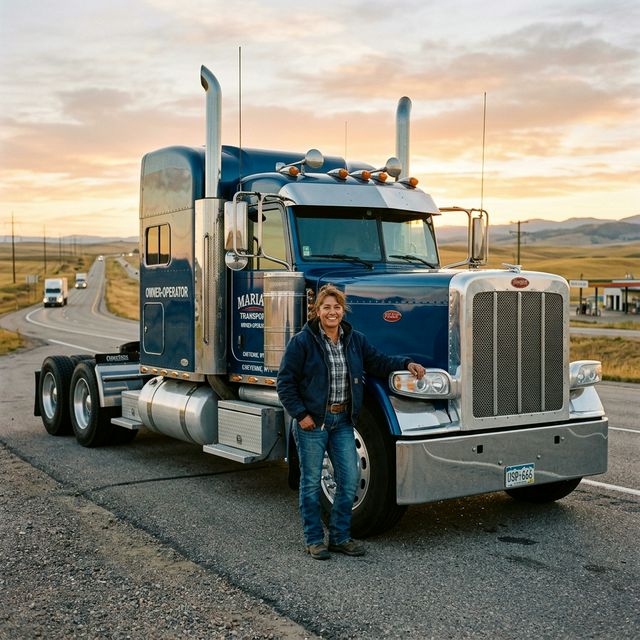
Digital Footprint Matters
In 2026, your online presence is a filter tier-A brokers use to evaluate your legitimacy before awarding premium loads.
6The Spot Market Psychology: Reading the "Broker Breath"
After thousands of phone calls, you start to develop a "sixth sense" for when a broker is lying and when they are actually backed into a corner. I call this reading the "Broker Breath."
If a broker answers the phone on the first ring and immediately starts explaining how "it's a light load and easy drop," they are trying to distract you from a low rate. However, if they sound stressed, you hear multiple desk phones ringing in the background, and they ask "how soon can you be there?" before you even say hello—you have the leverage.
In 2026, the best negotiators don't just ask for more money. They ask for "Accessorials" upfront. If the rate is firm, demand a $150 "Tarp Fee" for a flatbed load that technically doesn't need tarping according to the broker, but the shipper might insist on. Or demand a 2-hour detention window with $75 per hour thereafter, written into the rate confirmation. Often, a broker will give you $200 in "guaranteed extras" more easily than they will increase the base rate by $200.
7Lane Analysis: The Headhaul vs. Backhaul Trap
New owner-operators often chase the "Big Number" on the load board. They see a $4,000 load moving 1,000 miles and think they've struck gold. But where is that load going?
If that $4,000 load is going into Florida, the Pacific Northwest, or the Northeast during the winter, you are entering a "Dead Zone." These are Backhaul Markets—areas where more freight goes in than comes out. To leave Florida, you might have to take a load paying $1.20/mile just to get back to a good market like Atlanta.
The Strategy:Never look at a load in isolation. Look at the "Round Trip" average. A $2,500 "Headhaul" load going into a high-volume market (like Chicago or Dallas) is often more profitable than a $4,000 "Backhaul" load that leaves you stranded for three days or forces a 500-mile deadhead. At Priority Dispatch, we map out your next three moves before we book the first one.
8. Spotting the 2026 Double-Brokering Scams
Fraud has reached an all-time high in 2026. "Double brokering" is when a fake carrier bids on a load, wins it, and then re-posts it as a broker to an unsuspecting owner-operator. They collect the money from the original broker and never pay you.
How to protect yourself:Always ask for the "Physical Address of the Carrier" on the original rate con. If the broker sounds hesitant or the address is a PO Box or residential house on Google Maps, hang up. Furthermore, verify the email domain. If a "Landstar" broker is emailing you from landstarfreight@gmail.com or landstar-dispatch.net, it is a scam. Legitimate brokers only use corporate domains.
9. How to Survive a Freight Recession Without Going Bankrupt
The 2023–2025 downturn was a bloodbath for new authorities. The carriers who survived all shared one trait: they controlled their fixed costs ferociously.
During a downturn, your insurance premium, truck payment, and physical damage coverage are largely fixed. The variable costs you can control are fuel, maintenance timing, and driver wages. Smart carriers use slow periods to perform deferred maintenance (avoiding expensive breakdowns during busy periods), renegotiate insurance policies, and park trucks temporarily rather than running them at sub-cost rates.
The 90-Day Rule:Building a 90-day cash reserve during high-rate periods is the single most important financial discipline in trucking. The carriers who had 90-day reserves in mid-2023 were the ones who could wait for rates to recover. The carriers who had no reserve were the ones who took $1.10/mile loads and slowly destroyed their equipment and margins until they went under.
10Relationship Building: The End of the Load Board
The load board is for beginners. The real money in trucking in 2026 is made in "Private Networks." Once you move a load for a broker and do a perfect job—on time, no damage, great communication—you must follow up.
Send that broker a text: "Hey Jim, my truck is in this lane every Tuesday. Can we set up a dedicated run?" One dedicated, direct-with-broker lane is worth 1,000 random load board searches. It provides stability, predictable pay, and priority during slow markets.
A Final Word from the Dispatch Desk
This industry will chew you up if you operate purely on emotion and handshake agreements. You must run your truck like a Wall Street hedge fund. Protect your DOT score violently, negotiate relentlessly, and surround yourself with a back-office team that watches your blind spots.
If you are tired of fighting these battles alone, let my team at Priority Dispatch LLC handle it. We vet the brokers, fight for your detention pay, and negotiate the highest absolute margins daily. We don't just find freight; we protect your business.
About the Author
Muhammad Faisal Bilal is the Founder & CEO of Priority Dispatch LLC. With expertise in connecting TWIC-certified owner-operators with premium port freight, he helps drivers maximize their earnings through strategic load placement across all 48 states.
Connect on LinkedIn →